
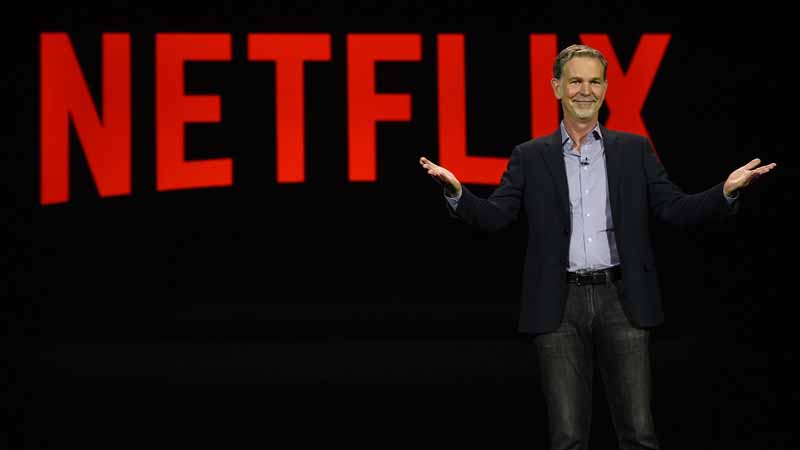

In 2025, Reed Hastings remains a reference point in discussions about strategy, culture, and long-term thinking, even after stepping back from day-to-day executive leadership at Netflix. In a recent interview, Hastings offered rare insight into how he thinks about decision-making, innovation, and leadership in an era defined by disruption and constant change.
Hastings explained that one of his core beliefs has always been freedom paired with responsibility. He reiterated that high-performance organizations are built by trusting people to make decisions, rather than controlling them through rigid processes. This philosophy, which shaped Netflix’s culture, is increasingly studied by leaders seeking agility in complex environments.
On innovation, Hastings emphasized that real transformation often comes from questioning assumptions, not incremental improvement. He noted that Netflix’s biggest strategic moves—such as shifting from DVDs to streaming, and later to original content—were driven by a willingness to disrupt its own success before external forces did. In 2025, he believes this mindset is more relevant than ever, especially as AI and new media formats reshape entertainment and information consumption.
Hastings also spoke candidly about failure. He argued that avoiding mistakes is far more dangerous than making them, particularly for large organizations. According to him, leaders must create environments where intelligent risk-taking is encouraged, otherwise innovation inevitably slows. This perspective contrasts with more cautious corporate cultures emerging amid economic uncertainty.
On leadership succession, Hastings highlighted the importance of building systems rather than heroes. He believes strong organizations should not depend on a single individual, but on clear values, transparent decision frameworks, and adaptable teams. This approach, he said, is essential for long-term resilience.
The conversation also touched on the broader role of companies in society. Hastings acknowledged growing public scrutiny of technology firms and stressed that transparency and accountability are now inseparable from business success. In his view, ignoring social impact ultimately weakens strategic credibility.
Inside the mind of Reed Hastings, leadership is not about control, visibility, or short-term wins. It is about designing cultures that can think independently, adapt quickly, and endure change. In 2025, his ideas continue to influence executives far beyond the media and technology sectors, reinforcing his reputation as one of the most thoughtful leaders of the modern corporate era.