
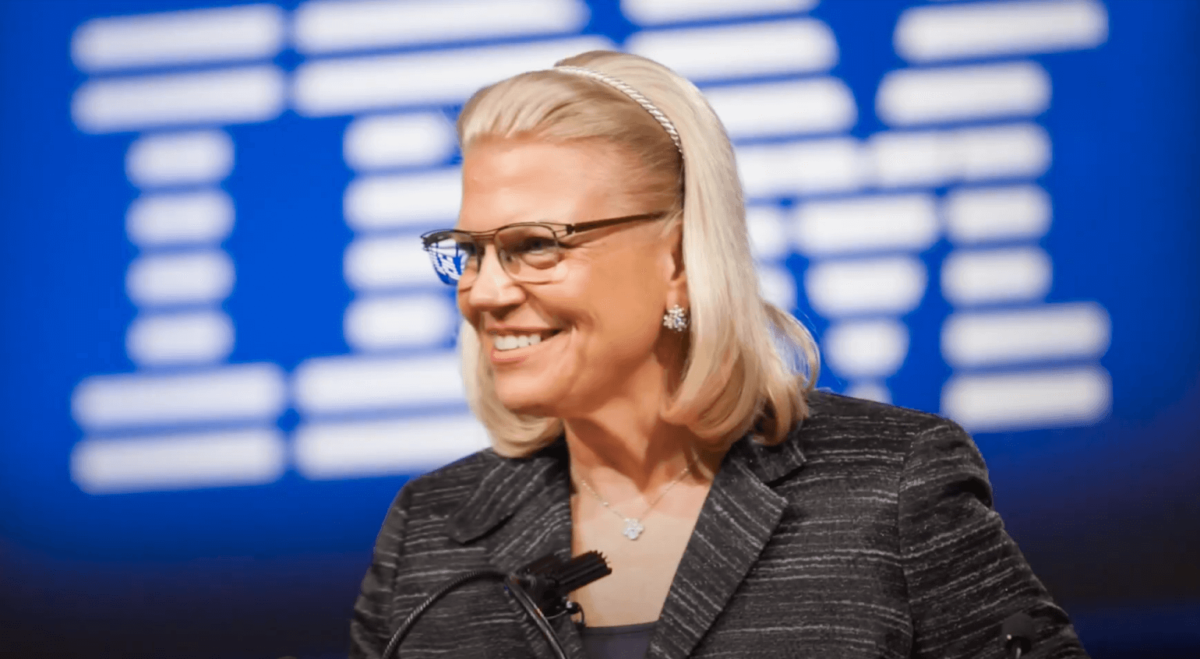


In 2025, Ginni Rometty remains a powerful reference in conversations about leadership through disruption, even years after stepping down as CEO of IBM. Her tenure is often revisited as a case study in how leaders confront structural change in legacy organizations under intense technological pressure.
Rometty’s leadership at IBM was defined by resilience in the face of long-term transformation. She took the helm at a time when IBM was moving away from traditional hardware and services toward cloud computing, artificial intelligence, and enterprise software. This transition required difficult trade-offs, including divestments, acquisitions, and a redefinition of IBM’s core identity.
One of her most significant strategic decisions was the focus on AI and hybrid cloud, positioning IBM as a technology partner for complex enterprises rather than a mass-market platform provider. While the transformation was gradual and met with skepticism, it laid the groundwork for a clearer strategic direction in an increasingly competitive tech landscape.
Rometty often speaks about resilience as a leadership skill, not a personality trait. In her view, resilience is built through preparation, continuous learning, and the ability to make decisions without immediate validation. Leading during uncertainty, she argues, requires accepting that transformation rarely delivers instant results.
Another central theme of her leadership philosophy is skills and education. Rometty championed large-scale workforce reskilling, emphasizing that talent adaptation is essential when industries evolve faster than traditional education systems. Her advocacy helped shift corporate conversations toward lifelong learning and skills-based hiring.
She also addressed the personal dimension of leadership. Rometty has been candid about the isolation of executive roles and the pressure faced by leaders making unpopular but necessary decisions. Her reflections highlight the importance of conviction, ethical clarity, and long-term accountability.
In 2025, Ginni Rometty’s legacy is less about quarterly performance and more about leading through transition. Her story illustrates that transformation in large organizations is complex, often uncomfortable, and rarely celebrated in real time. Yet her emphasis on resilience, strategic focus, and human capital continues to influence leaders navigating change across industries today.